I thought I knew a thing or two about Final Fantasy VII. I know some things, sure, but after watching Let’s Mosey: A Slow Translation Of Final Fantasy VII, I had a better understanding of what I didn’t know about Final Fantasy VII.
As I’m sure I’ve mentioned before, I wasn’t the first kid on the block to get the newest console, let alone the newest game. I’m okay with that. I wore it as a badge of honor. I saved my pennies as the release date of FFVII approached. I didn’t own a PlayStation, so I was in need of a lot of pennies. September 7, 1997 came and went, and I went on saving pennies.
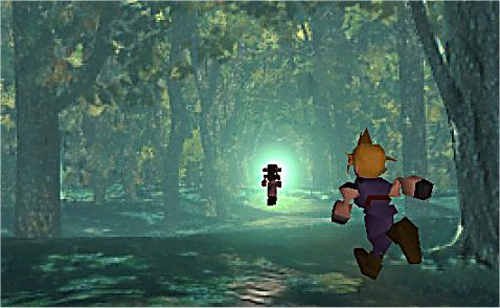
Meanwhile, I had dreams about what the game would be like. I dreamt images of Cloud walking through a forest full of leafless trees, a thick fog obscuring the figures just ahead on the path. Cloud drew his iconic sword, preparing for the imminent battle, when suddenly I was naked in front of the entire school. Hey, that’s dreams for ya.
Eventually, my dad took me to KB Toys where I acquired a PlayStation, a copy of Resident Evil, and a copy what I was sure to be the greatest RPG of all time. I popped in the first disc and…
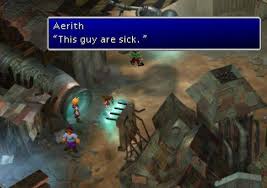
It was in fact the greatest RPG of all time. That’s what I thought at the time, anyway. Over the years I was able to take off the rose-colored glasses and look at the game more critically. I still love FFVII, but I’m able to appreciate it for what it is – flaws and all. The English translation often comes up when talking about flaws. There are some typos and odd lines throughout the game like, “Hey boy! You shore got a good lookin’ heifer there!” and, “This guy are sick.”
In Let’s Mosey, Kotaku’s Tim Rogers breaks down some of the notable differences between the English and original Japanese text. Many of these are weird or humorous mistranslations that I would expect, especially from the notoriously short window of time the localization team had to work on FFVII, but there was a lot of nuance that was lost in the process. Certainly more than I thought.
The contrast in Barret’s character, in particular, was astounding. Subtle (and not-so-subtle) changes in dialogue and mannerisms twist the intention of his masculinity. It’s not as though the western release rendered Barret unlovable. I loved Barret before, but after gaining a better understanding of him as originally written, I love him more than I could have imagined.
All of this is to say you should watch Let’s Mosey: A Slow Translation Of Final Fantasy VII because it is a great series, created by a great guy, about a great game. You will laugh because Tim is funny. If you care about the characters in this game, you might also cry. So grab those tissues and get watching.
 Handheld History